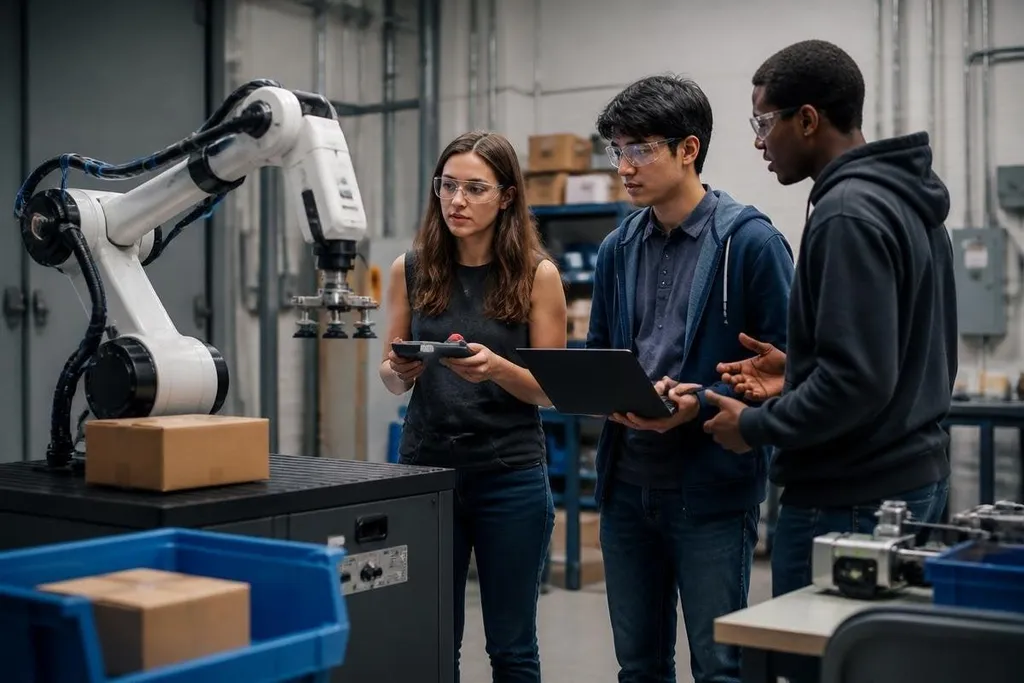
A robot can move a box, inspect a part, or sort an image. Someone still has to choose the task, set the limits, check the result, and fix the system when conditions change. Students need a mix of technical skills and practical judgment for that work.
Quick read
- Learn how robots sense, move, and make decisions.
- Practice with code, data, tools, and real machines.
- Build safety and communication into every project.
Start with how robots work
Students need a clear model of the machine in front of them. Sensors give the robot input, software processes that input, and commands reach motors or other hardware. That pattern applies to a mobile robot, a factory arm, and an autonomous vehicle.
The first useful lessons can stay small.
A student might read distance data from a sensor, set a motor speed, or write a rule that stops a robot near an obstacle. Each task connects code to a physical result, which makes errors easier to see and fix.
Math matters here because robots work with position, speed, force, and time. Students don't need advanced theory at the start, but they do need to understand units, graphs, angles, and basic probability. Those ideas help them tell a sensor error from a real change in the robot's surroundings.
Code is only one part of the job
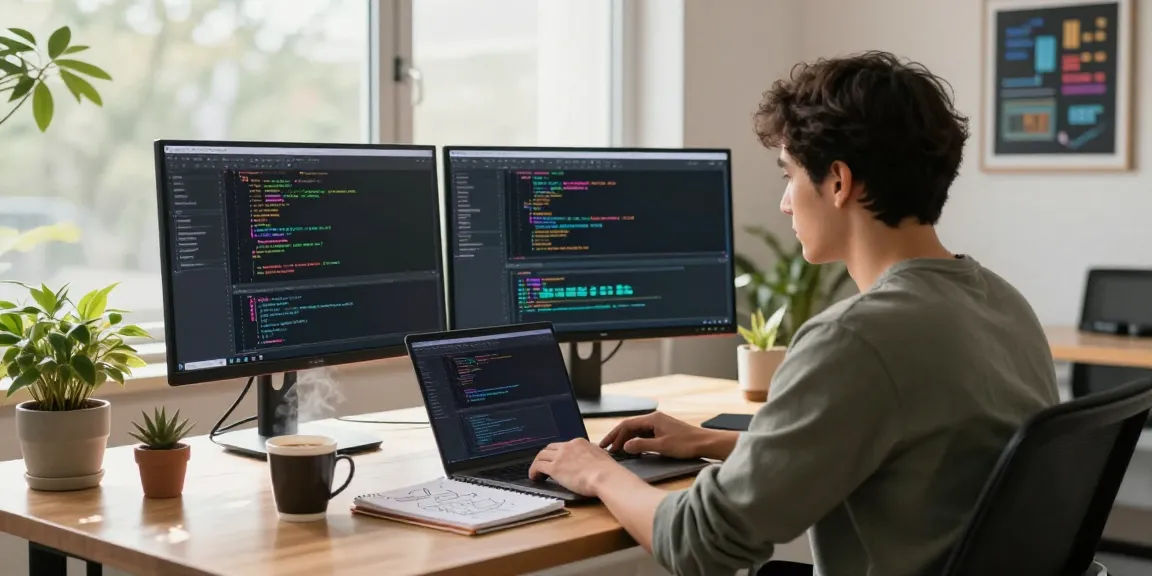
Python gives students a useful way to work with data, control hardware, and test simple robot behaviors. They should also learn to read existing code, name files clearly, record changes, and test one change at a time.
A project can fail because of a loose cable or a bad assumption. Syntax errors are only one possible cause.
Later, students can work with tools used in robotics teams, such as ROS 2, computer-aided design software, and simulation programs. The point is not to collect software names. It is to learn how separate parts communicate and how a simulated result can differ from a real machine.
That gap deserves attention. In a simulation, the robot may avoid a virtual wall, then miss a real one because light, dust, floor texture, or sensor placement changed. Students who compare a model with a physical test will be better prepared for work where conditions rarely stay fixed.
Safety and judgment belong in every project
A robot-powered workplace needs people who can spot risk before a motor moves. Students should learn why an emergency stop matters, how a workspace is marked, and how speed and force affect the danger around a machine. Safety should appear in the first project, not arrive as a separate lesson at the end.
They also need to ask what the robot should do when its data is incomplete. A useful system may stop, ask for help, or move to a safe position. That choice belongs to the person who designs the task, not to the machine alone.
Students can compare a classroom project with dated reports on robots in use. That comparison keeps their design notes tied to named machines and test results, while leaving room to mark claims that remain unproven.
I’d put safety judgment ahead of flashy robot tricks. A small project that records failures and explains its limits teaches more than a smooth demo with no test record.
Communication makes technical work useful
A student may build a working robot and still struggle to explain it to a plant manager, technician, or customer. Schools should ask students to write a short test plan, draw a system diagram, and explain what the robot cannot do. Those tasks turn private knowledge into work other people can check.
Team projects should give students different jobs across the build. One person can handle code, another can check wiring, and another can record test results. Students then learn how a change in one part affects the rest of the system.
The lesson should include failure records. A useful record names the test, the result, the suspected cause, and the next change. That habit helps a team return to a problem without repeating the same work.
A practical study plan
A student choosing a course, club, or project can check for these signs:
- Physical work: The project uses a real sensor, motor, arm, or mobile base.
- Code review: Someone reads the program and explains why it works.
- Test records: Each run has a clear goal and a recorded result.
- Safety steps: The build includes stops, limits, and a safe test area.
- Human explanation: The student must describe the design to someone outside the team.
A course that covers only robot theory leaves a large gap. A course that supplies hardware without asking students to explain decisions leaves another. The useful middle is repeated practice: build, test, record, and change one part.
Students don't need to predict which robot job will grow fastest. They need skills that stay useful across machines: clear code, careful measurement, safe decisions, and the ability to learn an unfamiliar tool. The next project should show those skills in a real test, with a result another person can verify.